
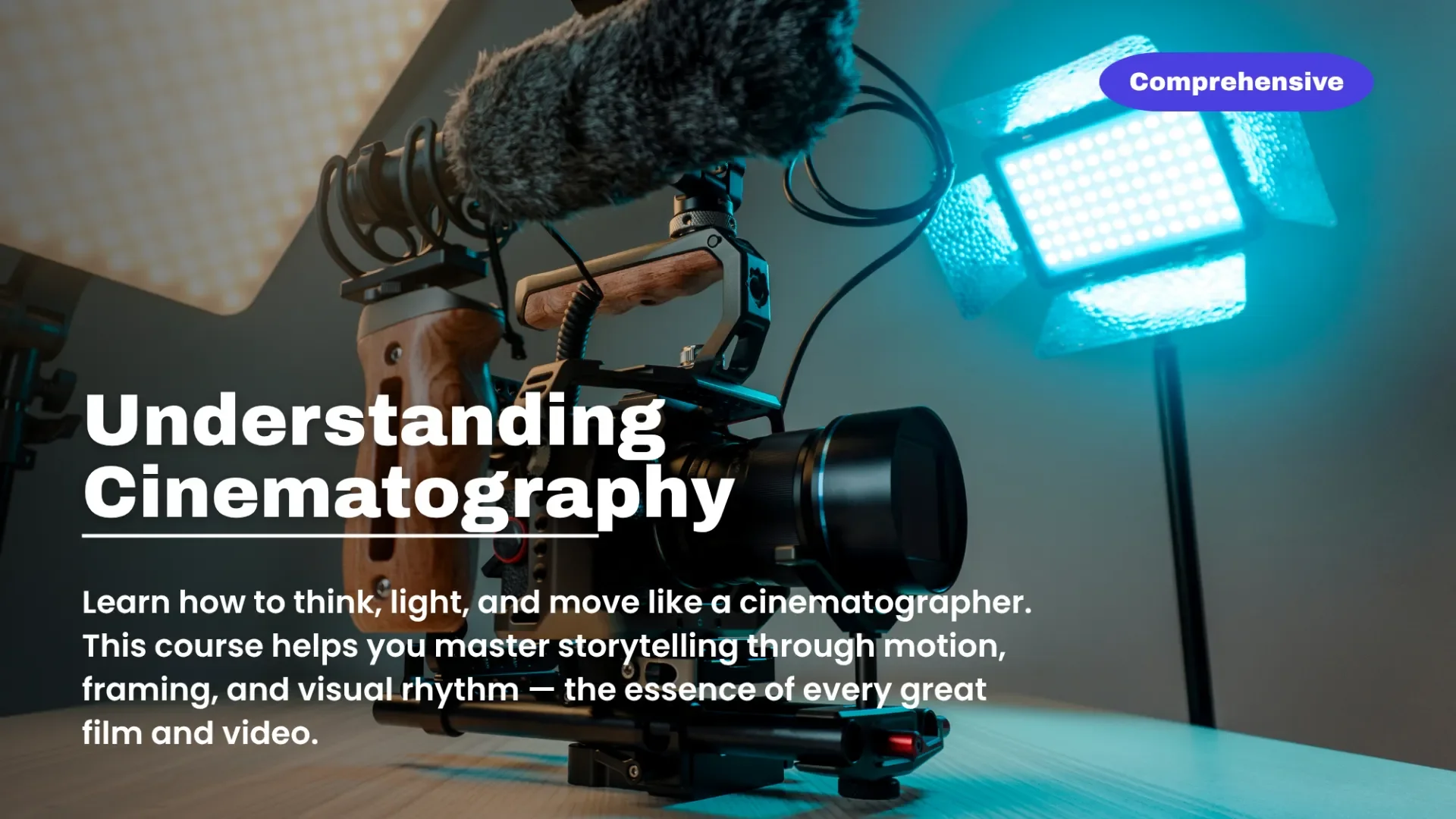
Quick answer: Cinematography basics for beginners: shot sizes, composition, lenses, the 180-degree shutter rule, lighting, movement, colour and coverage, explained simply.
What makes a video look "cinematic"? It isn't one setting or an expensive camera. It's a combination of decisions about framing, light, movement and colour, all serving the story. Here are ten principles every beginner should know.
1. Every shot serves the story
Before choosing a lens or light, ask: what should the audience feel here? Tension, intimacy, freedom, loneliness? Let that drive your choices.
2. Shot sizes have meaning
| Shot | Use |
| Extreme wide | Establish place and scale |
| Wide | Show characters in their environment |
| Medium | Conversation and action |
| Close-up | Emotion and reaction |
| Extreme close-up | Detail and intensity |
3. Composition and negative space
Use the rule of thirds, leading lines and framing. Leave "looking room" in the direction a character faces.
4. Lens choice shapes perspective
Wide lenses exaggerate space and movement; long lenses compress backgrounds and isolate subjects. Many films use a consistent set of focal lengths for a coherent look.
5. The 180-degree shutter rule
Set your shutter speed to about double your frame rate (1/50s at 24 or 25fps) for natural motion blur. In bright light, use ND filters instead of raising the shutter speed.
6. Shallow depth of field, used wisely
Background blur directs attention, but overusing it makes everything look the same. Choose depth of field deliberately.
7. Motivated lighting
Light should seem to come from a believable source: a window, a lamp, the sun. Contrast creates mood; soft, low-contrast light feels open and calm; hard, high-contrast light feels dramatic.
8. Purposeful movement
Camera movement should have a reason: revealing information, following a character or building tension. Static shots can be powerful too.
9. Colour tells the story
Colour palettes in costume, set and grade create mood. Warm tones feel nostalgic or intimate; cool tones feel distant or tense.
10. Think about coverage
Shoot a scene from enough angles that the editor can build it: wide, mediums, close-ups and inserts. Respect the 180-degree line so screen direction stays consistent.
Practise with a simple exercise
Shoot a one-minute scene of someone making tea: an establishing wide, medium shots, close-ups of hands and steam, and a reaction shot. Light it from a window. Edit it. You'll learn more than from hours of reading.
Learn cinematography properly
RAP Education's 12-month Understanding Cinematography program covers camera dynamics, lighting, composition, movement, editing and colour, with access to a fully equipped video studio, cinema lights and professional Sony cameras.
Frequently asked questions
What are the basics of cinematography?
Shot sizes, composition, lens choice, exposure and the 180-degree shutter rule, lighting, camera movement, colour and coverage.
How do I make my videos look cinematic?
Use purposeful composition, motivated lighting, controlled depth of field, the 180-degree shutter rule and a consistent colour grade.
What is the 180-degree shutter rule?
Setting the shutter speed to about double the frame rate, such as 1/50s at 24 or 25fps, for natural motion blur.
What frame rate is cinematic?
24fps is the traditional cinema frame rate; 25fps is common in PAL regions such as India for broadcast.
Do I need an expensive camera for cinematography?
No. Light, composition and movement matter more than the camera.
What is coverage in filmmaking?
Shooting a scene from multiple angles and sizes so the editor can build it smoothly.
What is motivated lighting?
Lighting that appears to come from a believable source in the scene, such as a window or lamp.
Where can I learn cinematography in Kolkata?
RAP Education's 12-month cinematography program and 18-month photography and cinematography program.
- #cinematic video
- #filmmaking basics
- #shot types
- #cinematic look
Photography courses near you: