Quick answer: A realistic roadmap to becoming a professional photographer in India: learning the craft, choosing a niche, building a portfolio, getting clients and growing income.
Becoming a professional photographer in India has never been more achievable. Demand for images and video is enormous, from weddings and fashion to e-commerce and social media. But turning a hobby into a career takes more than a good camera. Here's a practical roadmap.
Step 1: Learn the fundamentals properly
Before anything else, you need complete control of your camera:
- Aperture, shutter speed and ISO, and how they work together
- Focus modes, metering and white balance
- Lenses and focal lengths
- Composition and visual balance
- Reading and shaping light
Self-learning works for some people, but a structured course is usually faster because a mentor spots your mistakes immediately.
Step 2: Master light
Light is what separates professionals from amateurs. Learn natural light first, then flash and studio lighting: key, fill and rim lights, softboxes, reflectors and how light falls off. Studio skills open the doors to fashion, portrait, product and food work.
Step 3: Learn editing
Clients pay for finished images. Learn raw processing, colour correction, consistent styles and retouching, and build a fast workflow so you can deliver on time.
Step 4: Pick a niche (but stay curious)
Clients hire specialists. Popular niches in India include:
| Niche | Why it's in demand |
| Wedding photography and films | Huge market with high spending on weddings |
| Product and e-commerce | Every online seller needs clean product images |
| Fashion and portrait | Designers, brands, models and personal branding |
| Food photography | Restaurants, cloud kitchens and delivery apps |
| Events and corporate | Conferences, launches and headshots |
| Content creation | Reels and short video for brands |
Try several genres while learning, then focus on the one you enjoy and that pays in your area.
Step 5: Add video
Most clients now ask for photos and video. Basic cinematography and editing skills can double your opportunities.
Step 6: Build a portfolio that sells
- Show 15–25 of your best images, not hundreds.
- Make it match the work you want to be hired for.
- Include personal projects that show your style.
- Put it on a simple website and Instagram.
Step 7: Get real experience
- Assist established photographers. You learn client handling, lighting and workflow on real jobs.
- Do collaborative shoots with models, makeup artists and designers.
- Take on small paid jobs and over-deliver.
Step 8: Learn the business
- Price your work based on time, costs and value
- Use contracts and clear deliverables
- Manage files, backups and deadlines
- Market yourself consistently on social media
Step 9: Invest in gear gradually
Buy gear when your work demands it. One good camera body, two versatile lenses and a flash will take you a long way. Rent specialist equipment until you need it regularly.
Step 10: Keep learning
Trends, cameras and software change constantly. Workshops, masterclasses and personal projects keep your skills fresh.
How RAP Education helps
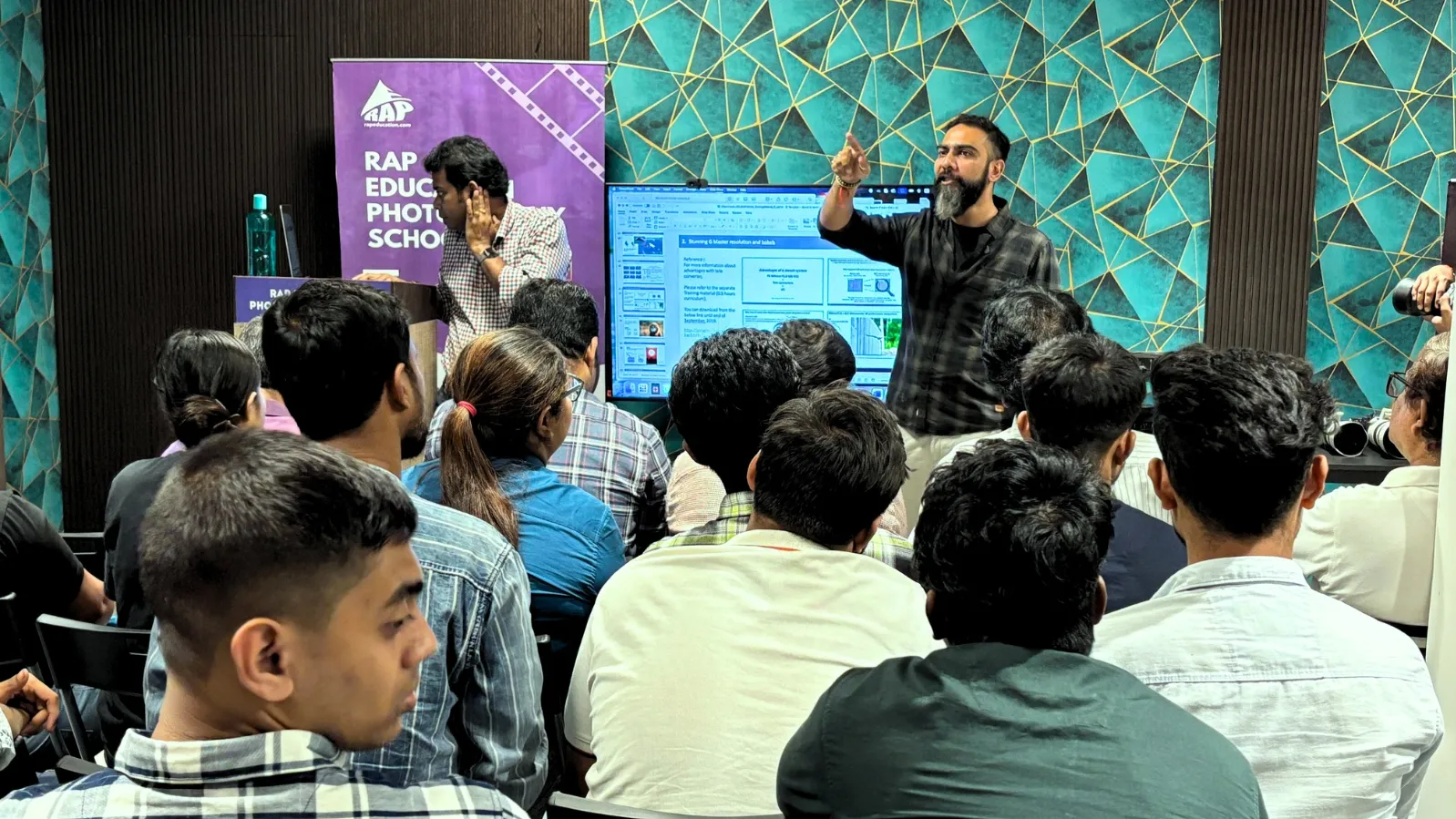
RAP Education's 12- and 18-month programs cover this whole roadmap: camera technology, lighting, genres, cinematography, editing, portfolio building and business skills, with professional Sony gear, a full studio, real shoots and 100% placement support.
Frequently asked questions
How long does it take to become a professional photographer?
With structured training and regular practice, many people become job-ready in 12–18 months. Building a strong client base takes longer and depends on consistency.
Do I need a degree to become a photographer in India?
No. Clients hire on portfolio and reliability. A professional course speeds up learning and helps with placements.
Which type of photography pays the most in India?
Wedding, fashion, commercial product and advertising photography are usually the best-paid areas, but income depends on skill, reputation and client base.
How do I get my first photography clients?
Assist established photographers, do collaborative shoots, share your work online and take small paid jobs to build reviews and referrals.
Should I learn video as a photographer?
Yes. Most clients want both photos and video, so cinematography skills greatly increase your opportunities.
What camera do I need to start professionally?
A reliable interchangeable-lens camera, two versatile lenses and a flash cover most early work. Upgrade as your jobs demand.
How many photos should be in my portfolio?
Around 15–25 of your strongest images, focused on the work you want to be hired for.
Does RAP Education help students start their careers?
Yes. RAP Education's programs include 100% placement support, portfolio reviews and introductions to studios, brands and production houses.
Can I become a photographer while working another job?
Yes. Many photographers start part-time with weekend shoots and switch to full-time once their income is steady.
- #professional photographer
- #photography career
- #become a photographer
Photography courses near you: