Quick answer: Wildlife photography for beginners: lens choice, autofocus and shutter settings, fieldcraft, light, composition and ethical behaviour around animals.
Wildlife photography combines patience, technical skill and respect for nature. It's challenging, but few experiences match capturing a wild animal's behaviour in beautiful light.
Gear basics
- Telephoto lens: at least 300mm (full-frame equivalent). APS-C cameras give extra reach.
- Fast autofocus with animal or bird eye detection
- Bean bag or monopod for support in vehicles and hides
- Weather protection for camera and lens
- Extra batteries and cards
Settings to start with
| Situation | Settings |
| Still animal | 1/500s, f/5.6–f/8, auto ISO |
| Moving animal | 1/1000s+, continuous AF, tracking |
| Birds in flight | 1/2000s+, continuous AF, burst |
| Panning | 1/60–1/125s, follow the subject |
Use continuous autofocus with a zone or tracking area, and shoot bursts at moments of action.
Light
Early mornings and late afternoons give soft, warm light and active animals. Harsh midday light flattens subjects and creates heavy shadows.
Fieldcraft
- Learn animal behaviour: anticipation is everything
- Be patient: waiting is part of the job
- Stay quiet and still
- Use cover and approach slowly
- Hire experienced local guides
Composition
- Focus on the eye
- Leave space in the direction the animal faces or moves
- Get low, at eye level with the animal
- Show habitat in some frames, not only tight portraits
- Capture behaviour: feeding, interaction, movement
Ethics first
- Never bait, chase or disturb animals
- Keep a safe distance, especially from nests
- Follow park and forest department rules
- Don't use flash on nocturnal animals
- The animal's welfare comes before any photo
Where to practise around Kolkata
Local parks, lakes and wetlands are great for practice: Santragachi Lake for winter birds, Rabindra Sarobar, the East Kolkata Wetlands area and the Botanic Garden. For bigger trips, the Sundarbans, Bethuadahari and the forests of North Bengal are popular.
Learn wildlife photography
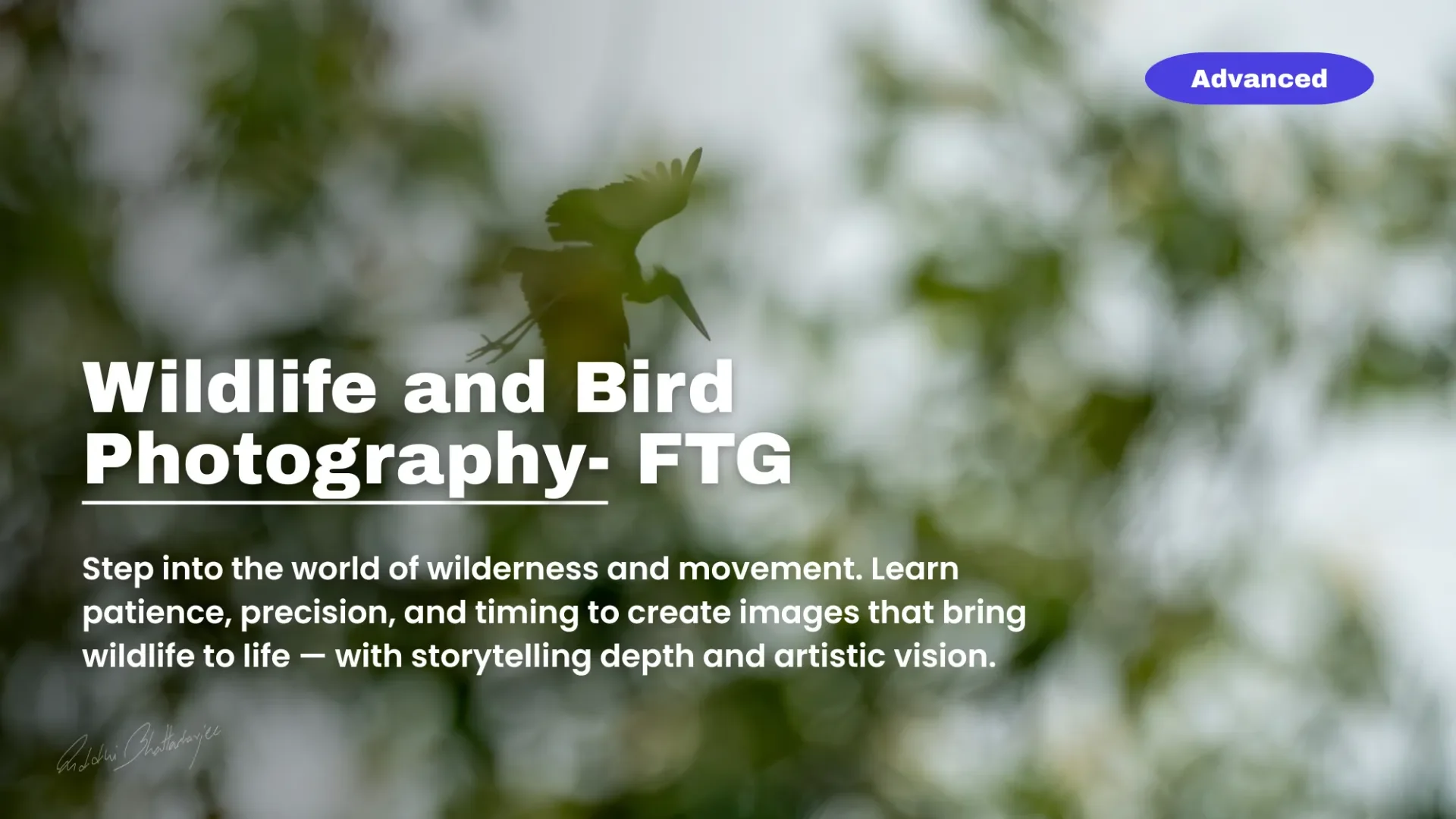
RAP Education's wildlife and bird photography masterclass covers field technique, long-lens skills, ethics and storytelling, with outdoor sessions and mentor feedback.
Frequently asked questions
What lens do I need for wildlife photography?
A telephoto lens of at least 300mm full-frame equivalent is a common starting point.
What camera settings are best for wildlife?
Fast shutter speeds (1/1000s or faster for action), continuous autofocus, burst mode and auto ISO.
What is the best time for wildlife photography?
Early morning and late afternoon, when light is soft and animals are more active.
How do I photograph birds in flight?
Use 1/2000s or faster, continuous AF with tracking, burst mode and practise panning smoothly.
Is APS-C good for wildlife photography?
Yes. The crop factor gives extra reach with the same lens.
What are the ethics of wildlife photography?
Never bait, chase or disturb animals, keep distance, follow park rules and put the animal's welfare first.
Where can I practise wildlife photography near Kolkata?
Santragachi Lake for winter birds, Rabindra Sarobar, wetlands and parks, plus trips to the Sundarbans and Bethuadahari.
Does RAP Education offer a wildlife photography course?
Yes, the wildlife and bird photography masterclass with outdoor sessions.
- #wildlife photography settings
- #telephoto lens
- #nature photography
- #wildlife ethics
Photography courses near you: